Home/Sleep Guides/Snoring
SnoringYou rolled onto your side and still snore. Here is the piece everyone misses
If your partner can tell which position you are in purely from the noise, you have positional snoring. Here is why side sleeping alone often changes nothing, and what does.
Ben's wife had been sleeping in the spare room three or four nights a week for the better part of a year. Neither of them wanted to call it a problem, exactly, so they called it practical, and they made jokes about it at dinner parties. Privately it bothered them both, and Ben had worked through the usual escalating list of remedies, which included nasal strips, a mouth spray from the pharmacy, sleeping propped up on a stack of cushions and cutting out his evening beer for six weeks, which he says he will never forgive the internet for.
What he had not done was pay attention to the one thing his wife had mentioned repeatedly without either of them registering it as information. She had noticed that on the nights she stayed, he was almost silent when he was curled on his side and unbearable within minutes of rolling onto his back. That observation, which she had been making offhandedly for months, is the definition of positional snoring, and it is the single most treatable form there is.
This guide explains why sleep position changes snoring so dramatically, why so many people try side sleeping and get no benefit from it, and where the boundary sits between a snoring problem you can address at home and one that needs a doctor. That last part matters, so it appears early rather than buried at the end.
Why position changes the sound so much
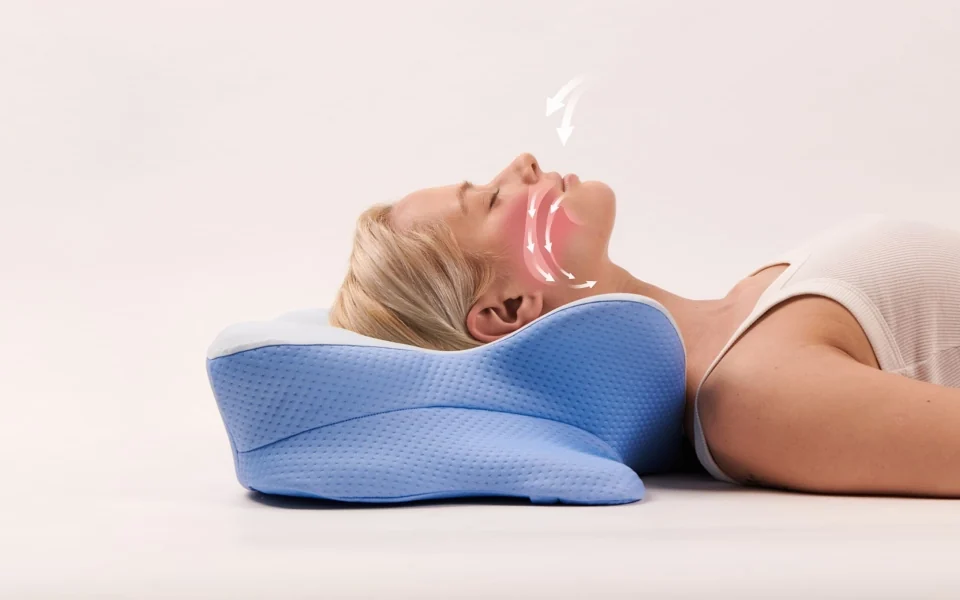
Snoring is the sound of soft tissue vibrating as air passes through a narrowed airway. The tissue in question sits at the back of your throat, and it includes the soft palate, the uvula and the base of the tongue. When your airway is wide open, air moves through smoothly and silently. When it narrows, the airflow speeds up, pressure drops and the surrounding tissue starts to flutter, which is what produces the noise.
Lying on your back is the position most likely to cause that narrowing, for a straightforwardly mechanical reason. Gravity pulls the tongue and the soft palate backward toward the rear wall of the throat, and there is nothing holding them forward while the muscles are relaxed in sleep. The airway narrows, the airflow accelerates, and the vibration begins.
Roll onto your side and gravity now pulls that same tissue sideways rather than backward, away from the airway rather than into it. The passage stays wider, the airflow stays slower and the vibration reduces or stops entirely. This is why the side sleeping recommendation is so universal, and why it works so dramatically for the people it works for.
If your partner can tell which position you are in purely from the noise, you have positional snoring, and positional snoring is the version with the most straightforward answer.
There is a second mechanism that gets far less attention, which is the angle of your head and neck. Even on your side, if your chin is pushed down toward your chest, the airway is compressed at the front of the throat. And if your head is tipped backward into extension, the airway is stretched and narrowed a different way. Both of these are determined almost entirely by the height of your pillow, which is why so many people change position, see no improvement and give up on the advice.
Why side sleeping often fails to help
Here is the most common version of the disappointment. Someone reads that side sleeping reduces snoring, makes a deliberate effort to fall asleep on their side, and reports that it made no difference whatsoever. Two explanations account for the overwhelming majority of these cases.
The first is that they did not actually stay on their side. Position at the moment of falling asleep and position across the whole night are very different things, and most people roll onto their back within an hour or two out of pure habit. If the snoring only occurs on the back, and they spend four hours on their back, the position change accomplished nothing measurable.
The second and more interesting explanation is that they stayed on their side but their pillow undid the benefit. On your side, the gap between your head and the mattress equals the width of your shoulder, which for most adults is four to six and a half inches. If the pillow does not fill that gap, the head sags downward toward the mattress and the chin tips toward the chest, closing the airway at exactly the point you were trying to open it. Someone in that situation has genuinely changed position and genuinely gained nothing, because the geometry of their neck is still wrong.
This is the reason snoring advice so often includes pillow recommendations rather than just position recommendations. The position matters because of what it does to the airway, and the pillow determines whether that benefit survives contact with reality.
How to actually stay on your side all night
You cannot consciously control your position past the point of falling asleep, so willpower is not the tool here. What works is making the side position comfortable enough to stay in and the back position slightly awkward enough to leave.
Making side sleeping comfortable is largely about support. A pillow that properly fills the shoulder gap means your neck is not straining, which removes one of the main reasons people unconsciously roll away from the position. A pillow between the knees keeps the pelvis square and stops the lower back twist that makes side sleeping uncomfortable over hours. A body pillow to hug gives the upper arm somewhere to rest instead of dangling forward. These three additions between them convert side sleeping from something you tolerate into something you settle into.
Making back sleeping less appealing is the older half of the strategy, and the traditional version is the tennis ball trick, which involves sewing a tennis ball into the back of a sleep shirt so that rolling over is uncomfortable enough to prompt a return to the side without fully waking. It is crude and it genuinely works for many people. Commercial positional therapy devices do the same thing more elegantly, using a soft wedge or a vibrating sensor that nudges you back over.
Wedging pillows along your back to physically block the roll is the simplest version and requires nothing but what you already own. It is less reliable than the tennis ball approach because a determined sleeper will simply push through the barrier, but it costs nothing to try for a week.
Getting the pillow height right for your airway
The relationship between pillow height and snoring is more direct than most people realize, and it works in both directions, which is what makes it confusing.
Too little height allows the head to drop and the chin to fall toward the chest. This compresses the front of the throat and narrows the airway, and it is the most common pillow related contributor to snoring in side sleepers. It is also why some people find they snore less on a firmer, taller pillow, which seems counterintuitive until you picture the angle.
Too much height pushes the head forward and up, which sounds like it should open the airway but actually kinks it in a different place. People on excessively tall pillows frequently report waking with a dry throat and a sense that breathing was restricted, and their partners often report that the snoring changed character rather than stopped.
The target in both cases is neutral, meaning your head and neck sit in a straight line with the rest of your spine and your chin is neither tucked nor tipped. A useful visual check is to have someone photograph you from behind while you lie on your side in your normal position. A straight line from tailbone to crown means your airway is in the best position your bedding can put it in.
This is where contoured pillow designs earn their reputation among snorers. A shaped pillow with raised side arches and a lower center holds the head at an appropriate height in either position without requiring you to adjust anything, and designs like the Derila Ergo add recessed pockets for the under arm so that side sleeping stays comfortable enough to maintain across a full night. The pillow is not treating anything. It is holding your airway in the geometry that produces the least vibration, and for positional snorers that is frequently enough.
Keep your airway in a neutral line.
The Derila Ergo holds your head and neck straight in either position, which is the geometry positional snorers are trying to reach when they roll onto their side.
Check Today's Bundle Prices →60 night home trial · Free US shipping · Up to 60% off bundles
The other factors that make positional snoring worse
Position and pillow height are the two variables you can change tonight, but several others meaningfully affect how much noise a given position produces, and addressing them amplifies whatever benefit the position change delivers.
Alcohol in the evening is the most reliable amplifier of them all. It relaxes the muscles of the throat beyond their normal sleeping tone, which means the airway narrows more than it otherwise would in any position. It also suppresses the small position changes that happen naturally through the night, so someone who drinks before bed is more likely to remain flat on their back for hours. Anyone whose snoring is dramatically worse on some nights than others should look at this correlation first.
Nasal congestion forces mouth breathing, which bypasses the filtering and humidifying function of the nose and directs airflow straight across the soft palate at higher velocity. Allergies, a cold, or a structural issue like a deviated septum all produce this. Treating the congestion often reduces snoring substantially, and it is worth ruling out before concluding that position is the whole story.
Weight around the neck adds external pressure on the airway and is a well established contributor. This is a sensitive subject and it is worth saying plainly that plenty of slim people snore heavily and plenty of larger people do not, so it is a factor rather than a verdict. Where it applies, even modest changes tend to produce noticeable improvement.
Dry bedroom air irritates the throat tissue and makes it more prone to vibration, which is why snoring often gets worse in winter when heating systems strip humidity out of the air. A humidifier is an inexpensive experiment and occasionally makes a surprising difference.
Sleeping position of the head aside, the timing of your last meal matters too, since lying down soon after eating increases the likelihood of reflux, and reflux irritates the throat in ways that worsen snoring. Leaving three hours between dinner and bed is a small change with a reasonable evidence base behind it.
The line between snoring and something that needs a doctor
This section matters more than any other on this page, and it deserves to be read carefully rather than skimmed. Simple snoring is noise. Obstructive sleep apnea is a medical condition in which the airway closes repeatedly through the night, oxygen levels drop, and the brain triggers a partial awakening to restart breathing. It carries genuine cardiovascular risk and it is not something a pillow or a sleeping position addresses.
Several signs should prompt a proper medical assessment rather than another home remedy. Gasping, choking or snorting sounds during sleep, particularly if a partner describes pauses in breathing, are the clearest indicator. Waking unrefreshed after a full night in bed, or feeling persistently exhausted during the day despite adequate sleep hours, is another. Morning headaches, difficulty concentrating, waking with a very dry mouth or throat every single day, and high blood pressure that is difficult to control are all associated.
Loud snoring on its own is common and usually benign. Loud snoring combined with any of the above deserves a sleep study, and sleep studies are now frequently done at home with a small monitor rather than in a clinic, which has removed most of the inconvenience that used to put people off. Positional therapy is sometimes recommended as part of the treatment for mild positional apnea, but that is a decision for a clinician to make after testing, not something to self diagnose.
To be completely clear: no pillow, including any ergonomic or contoured design, treats obstructive sleep apnea. A well designed pillow can help keep the airway in a more open position, which can reduce simple positional snoring. If there is any suspicion of apnea, see a doctor. The two things are not substitutes for each other and treating one as though it were the other is genuinely risky.
Where the various anti snoring products actually fit
The market is crowded and it is worth understanding what each category is trying to do, because they address different mechanisms and buying the wrong one for your particular cause is the usual reason people conclude that nothing works.
Nasal strips and internal nasal dilators widen the nostrils and are aimed squarely at nasal obstruction. If your snoring stems from congestion or a narrow nasal passage, they can help meaningfully. If your snoring originates at the soft palate, which is the more common source, they will do essentially nothing, and this mismatch accounts for a great many disappointed reviews.
Mandibular advancement devices are mouthguard style appliances that hold the lower jaw slightly forward, which pulls the base of the tongue away from the back of the throat. These have reasonable evidence behind them for snoring and for mild sleep apnea, and the properly fitted versions made by a dentist work considerably better than the generic boil and bite versions sold online. They are also the option most people find least comfortable, and adherence tends to be the limiting factor.
Throat sprays and lubricants coat the soft tissue and claim to reduce vibration. The evidence here is thin and the effect, where it exists, is short lived. They are inexpensive enough to try and unlikely to be the answer on their own.
Positional therapy devices, which is the category that includes everything from a tennis ball sewn into a shirt to vibrating sensors worn on the chest, are the most directly relevant option for anyone whose recordings show a clear back sleeping pattern. Their advantage is that they address the mechanism rather than the symptom, and their disadvantage is that they only work for positional snorers, which is why establishing that first is worth the two weeks it takes.
The part that gets left out: your partner is not sleeping either
Almost all snoring advice is written for the snorer, which is odd given that the person losing the most sleep is usually the one lying awake next to them. Chronic exposure to a snoring partner produces genuine sleep fragmentation, and the daytime consequences of that are real rather than a matter of irritation.
It is worth naming this openly rather than letting it become a running joke, because the resentment that builds when it goes unaddressed does more damage to a relationship than the noise does. Separate rooms are a practical solution that a great many couples use successfully and that carries an entirely undeserved stigma. There is nothing wrong with sleeping apart if it means two rested people rather than one rested person and one exhausted one.
In the meantime, the partner deserves their own toolkit rather than being told to be patient. Good earplugs, meaning properly fitted foam or silicone rather than the cheapest available, block a significant proportion of the low frequency sound. A white noise machine or a fan masks the variability that makes snoring so disruptive, since it is the sudden onset rather than the constant volume that triggers awakenings. Going to bed twenty or thirty minutes earlier than the snorer means falling asleep in silence, which is far easier than falling asleep alongside noise.
How to test whether your snoring is positional
Before investing in anything, it is worth confirming that position is actually the variable, because that determines whether any of this will help you.
The easiest method is a recording app. Several free options run overnight, detect sound above a threshold and produce a timeline of when snoring occurred and how loud it was. Run it for a week without changing anything, which gives you a baseline. Then run it for a second week while making a deliberate effort to start the night on your side, ideally with the support additions described above. If the two weeks look meaningfully different, position is your variable and you have a clear direction.
The lower tech version is simply to ask whoever shares your bed to pay attention to the correlation for a few nights. Partners are usually excellent observers of this, because they have been lying awake cataloguing it for months already. Ben's wife had effectively completed this study without either of them noticing that she had.
What you are looking for is a consistent pattern rather than a single good night, because snoring varies naturally with alcohol, congestion, fatigue and sleeping depth. Two weeks of data separates a real effect from a coincidence, and it is worth the patience.
The evening routine that stacks the odds
Position and pillow do the heavy lifting, but the hours before bed set the conditions, and a few small adjustments compound with everything else described here.
Finishing alcohol at least three hours before sleeping removes most of its muscle relaxing effect by the time you lie down, which is a meaningfully different proposition from cutting it out entirely and considerably easier to sustain. The same three hour gap after your last substantial meal reduces the chance of reflux irritating the throat overnight.
Clearing the nose before bed matters more than its simplicity suggests, since anything that forces mouth breathing sends air across the soft palate at higher speed. A saline rinse or a hot shower shortly before sleeping opens the passages for long enough to get you through the transition into deep sleep, which is when the pattern for the night tends to get established.
Consistency of bedtime is the least obvious item on the list and one of the more useful. Severe sleep deprivation deepens the muscle relaxation of your first sleep cycles, which is why an exhausting week often produces the loudest nights. Going to bed at a similar time each night reduces that rebound effect and takes one variable out of the picture.
What a realistic result looks like
It is worth calibrating expectations, because the internet tends to present this as either a miracle or a scam and it is usually neither. For a genuine positional snorer who successfully stays on their side with proper neck support, the typical outcome is a substantial reduction in volume and frequency rather than complete silence. Partners commonly describe it as going from unbearable to tolerable, or from a noise that woke them to a noise they slept through.
Complete elimination happens, and it is not rare, but it is not the standard result and promising it would be dishonest. Snoring has multiple contributing factors and position is one of them, so removing one factor reduces the total without necessarily zeroing it.
The timeline is usually fast, which is one of the more encouraging aspects. Unlike interventions that need weeks to take effect, a position and support change either works on the first night it is properly maintained or it does not. What takes time is the habit of staying in the position, and that is where most of the effort goes.
How it ended for Ben
He ran the recording app for two weeks because he did not believe his wife's observation, which he now describes as the least intelligent two weeks of the whole project. The data was unambiguous. Long silent stretches, then a sharp onset that lined up almost exactly with the times he estimated he had rolled over.
He changed three things at once, which is bad experimental practice but reasonable when you have already confirmed the variable. A contoured pillow tall enough to actually fill his shoulder gap, a pillow between his knees, and a rolled up comforter wedged along his back for the first month until staying on his side stopped requiring reinforcement. The recordings from the following month were not silent, but the loud stretches dropped from hours to minutes.
His wife moved back after about five weeks. The thing worth noting is that he had spent close to a year on remedies aimed at the throat itself, when the actual variable was the angle his neck was held at all night, and the person best positioned to notice that had been telling him for months.
Ready to fix the thing under your head?
The Derila Ergo is a butterfly ergonomic memory foam pillow with four support zones, a ventilated cooling core and a washable cover. Bundles are up to 60% off today with free US shipping.
See Today's Bundle Prices →60 night home trial · Free US shipping · 4.7 from 50,000+ owners
Keep reading
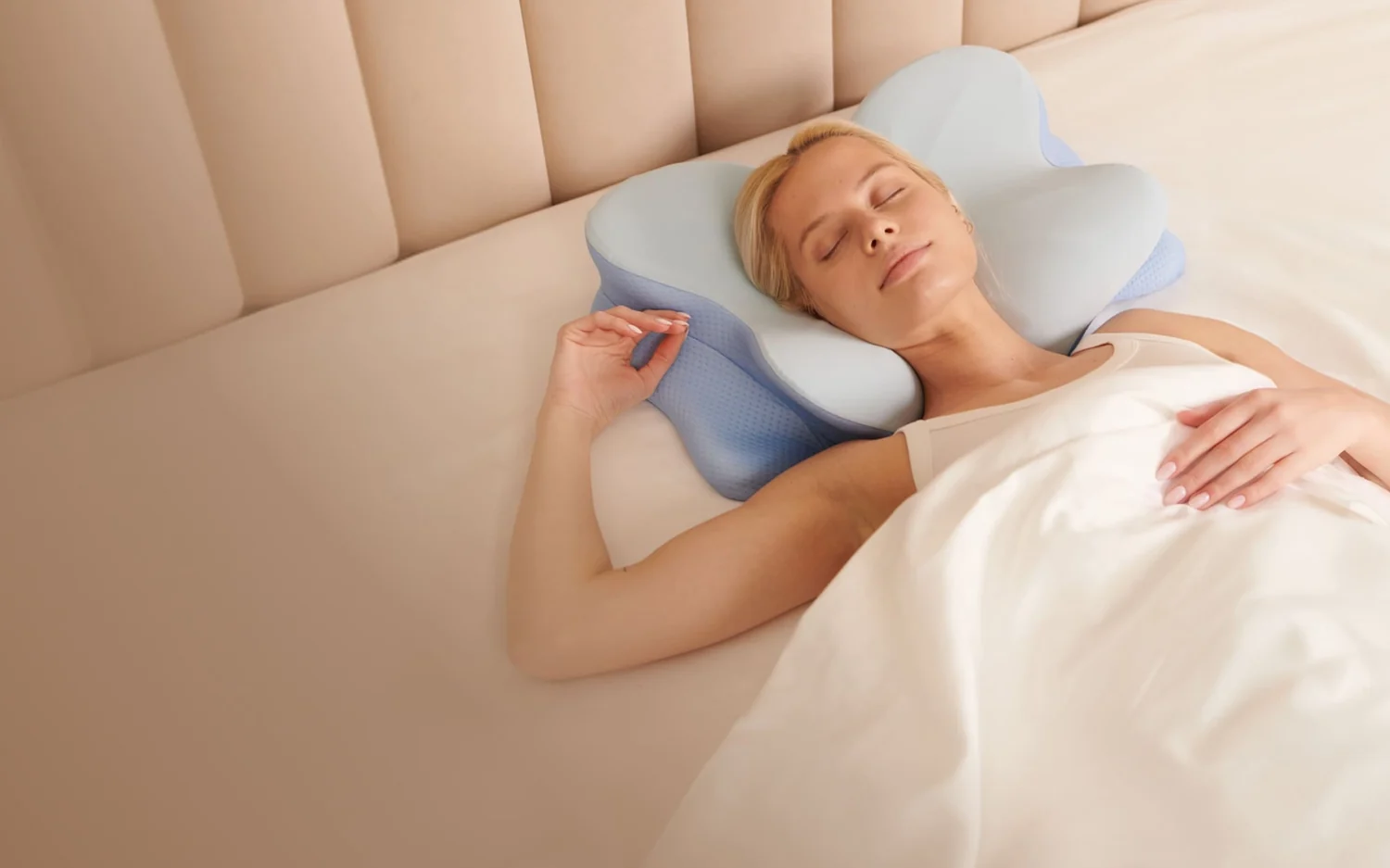
The two-minute measurement that ends years of pillow guesswork
Loft is the number one reason ergonomic pillows get returned. Here is how to measure yours in about two minutes, and why your mattress quietly changes the answer.
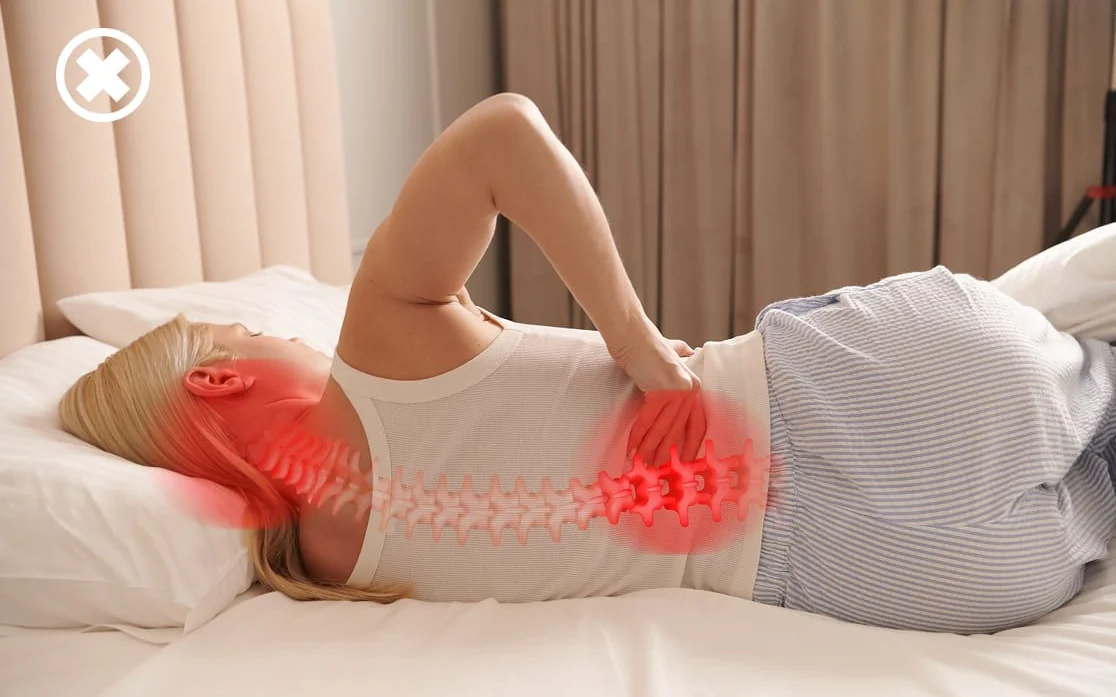
Why your neck hurts every morning, and the seven fixes that actually work
If your neck pain is worst before you have done anything and better after you have done everything, the problem is happening while you sleep. Here is how to find out which cause is yours.
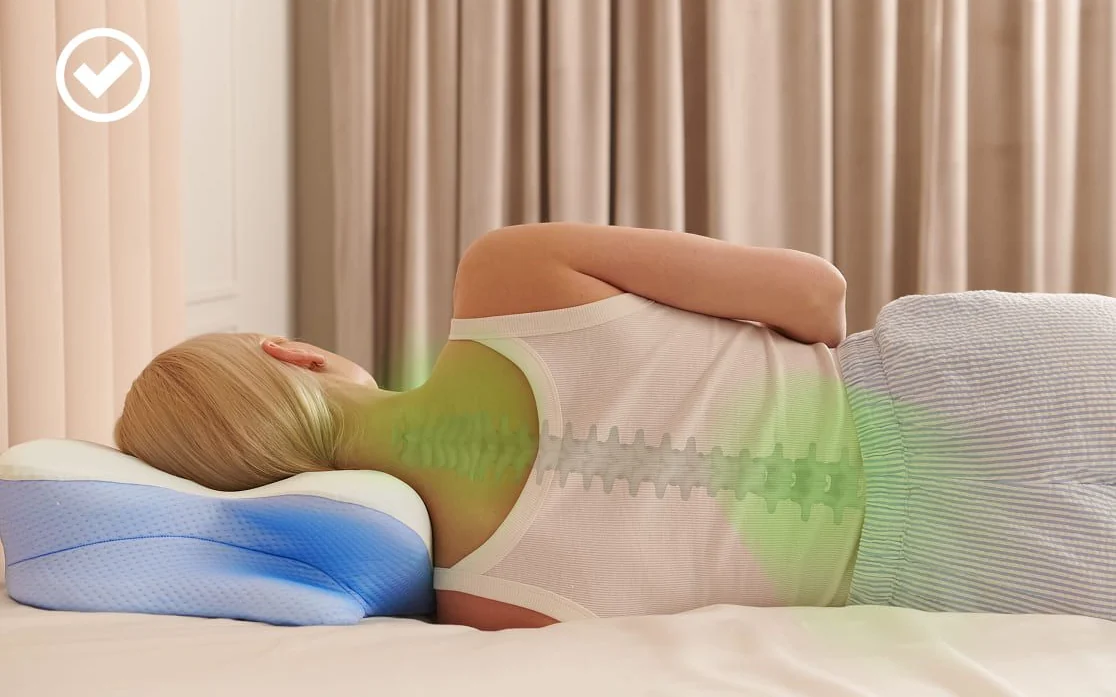
Four alignment mistakes that are wrecking every side sleeper’s morning
Side sleeping is the most popular position and the most demanding on your bedding. Four alignment problems it creates, and how to correct every one of them.