Home/Sleep Guides/Buying Guide
Buying GuideMemory foam or a regular pillow: which one your neck actually needs
The qualities that make a pillow feel good in your hand have almost nothing to do with the qualities that support your neck for seven hours. Here is the honest comparison.
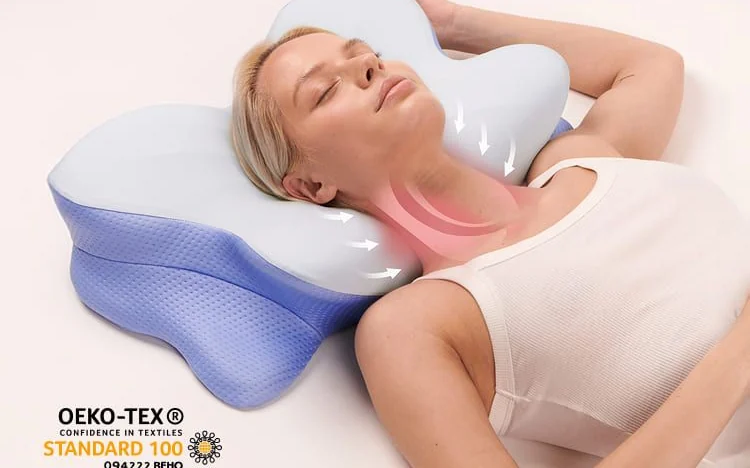
There is a particular kind of shopping paralysis that happens in the pillow aisle. On one side sits a wall of soft, inviting rectangles filled with down alternative and polyester, priced between fifteen and forty dollars, that squash satisfyingly when you press them. On the other side sits a smaller selection of dense, oddly shaped memory foam pillows costing three or four times as much, that barely move when you press them and look nothing like the pillow you grew up with.
Priya stood in exactly that aisle for twenty minutes before buying the soft one, because it felt better in her hand and because spending sixty dollars on a pillow struck her as absurd. Fourteen months and two more soft pillows later, she had developed a reliable morning routine of stretching her neck against the bathroom doorframe before she could comfortably look over her shoulder in the car. The soft pillows had felt wonderful for approximately three weeks each.
What she had run into is the central fact of this comparison, which is that the qualities that make a pillow feel good in your hand for five seconds have very little relationship to the qualities that make a pillow support your neck for seven hours. This guide breaks down how memory foam and conventional fill actually differ, where each one genuinely wins, and how to work out which side of the aisle your particular body belongs on.
What actually differs between the two
A conventional pillow is a fabric shell filled with loose material, whether that is down, feathers, polyester fibers, shredded foam or some blend. Support comes from the volume of material trapped inside, and that material moves freely. Press it and it displaces sideways. Lift the pressure and it slowly redistributes, mostly returning to where it started, at least for a while.
A memory foam pillow is a single solid piece of viscoelastic polyurethane, or in some designs a shell filled with shredded pieces of the same material. Viscoelastic means it responds to both pressure and temperature, softening slightly where your body heat touches it and firming where it does not. It does not displace sideways the way loose fill does. Instead it compresses in place, conforming to the shape pressing into it, and then returns to its original shape when that pressure is removed.
That difference in mechanism produces every other difference between the two categories. Loose fill spreads pressure by moving out of the way. Memory foam spreads pressure by increasing the surface area in contact with you. Both reduce pressure points, but only one of them holds a specific height while doing it, and holding a specific height is the entire job description of a pillow.
A conventional pillow gets out of the way of your head. A memory foam pillow holds your head up. Those sound similar and they are close to opposite.
The support question, and why three in the morning matters
Any pillow can feel supportive at the moment you lie down. The meaningful test is what it is doing four hours later, and this is where the two categories separate most decisively.
Loose fill compresses under sustained load and, critically, does not push back. The fibers pack down, migrate toward the edges and settle. Someone who lies down on a four inch down alternative pillow is frequently sleeping on two inches of it by the middle of the night, which means their neck spent the first part of the night supported and the rest of it sagging. Because the change happens gradually while they are asleep, they never perceive it as a collapse. They just wake up stiff and blame something else.
High density memory foam behaves differently because its resistance to compression is a property of the material rather than a function of how much air is trapped inside it. It compresses to a point and then holds, which means a memory foam pillow that measures four inches under your head at bedtime is still measuring close to four inches at dawn. That consistency is not a marketing detail, it is the single most important functional difference between the two types.
The same distinction plays out over months rather than hours. Polyester and down alternative fill permanently deform with use, losing loft steadily until the pillow is functionally two inches shorter than the one you bought. Most people replace these every one to two years, often later than they should because the decline is invisible. A good memory foam pillow typically holds its shape for two to three years and sometimes considerably longer, since the cell structure rebounds fully each morning rather than accumulating permanent damage.
Where conventional pillows genuinely win
It would be dishonest to present this as a one sided contest, because conventional fill has real advantages and there are people for whom it is the correct choice.
The first advantage is adjustability. A loose fill pillow can be punched, folded, scrunched and shaped, and for people who like to reshape their pillow through the night that is a genuine pleasure that solid foam cannot offer. Shredded memory foam sits interestingly in the middle here, since it can be reshaped like loose fill while retaining some of foam's resistance, and many shredded designs allow you to remove or add filling to tune the height.
The second is temperature, at least historically. Loose fill has air moving through it constantly, while a solid foam block is dense and traditionally trapped heat against the skin. This was a legitimate and widespread complaint about early memory foam pillows. Modern designs address it with perforated or channeled cores and breathable knit covers that move warm air out rather than sealing it in, so the gap has narrowed considerably, but a plain unventilated foam block will still run warmer than a down pillow.
The third is weight and washability. A polyester pillow can often go through a washing machine whole, which is convenient. A memory foam core never can, because water and mechanical agitation break down the cell structure permanently. Foam pillows instead rely on a removable, washable cover, which works well but requires the cover to actually be removable, so it is worth checking before buying.
The fourth is price. A conventional pillow costs less upfront, and if you replace it every eighteen months the running cost still comes out lower than a premium foam pillow over a short horizon. Over four or five years the arithmetic tends to reverse, particularly once you account for the pillows bought and abandoned along the way.
Where memory foam wins, and for whom
Memory foam's advantages cluster around one theme, which is holding a specific position under sustained load. If your reason for buying a pillow is comfort in a general sense, that advantage may not matter much to you. If your reason is that you keep waking up with a stiff neck, it is the only thing that matters.
Anyone with morning neck pain, shoulder pain or upper back tension is the clearest candidate, because those symptoms usually indicate that the neck spent the night out of alignment, and consistent height is what corrects that. Side sleepers are the next clearest group, since they need the most pillow height of any position and are therefore the most exposed to a pillow that loses loft partway through the night.
People with a strong preference for a particular sleeping position benefit too, because foam allows shaped designs in a way loose fill does not. You cannot build reliable contours into a bag of fibers, since the fibers move. You can mold them permanently into foam, which is why every contoured ergonomic pillow on the market is a foam product. That capability is what makes designs like the Derila Ergo possible, with a lower central cradle for back sleeping, raised arches sized to fill the shoulder gap for side sleeping and recessed pockets for the under arm, all held in a fixed geometry that does not shift when you move.
Dense foam, ventilated core, contoured shape.
The Derila Ergo is built around the three things that separate a pillow that lasts three years from one that flattens in three months.
Check Today's Bundle Prices →60 night home trial · Free US shipping · Up to 60% off bundles
Solid foam or shredded foam?
Within the memory foam category there is a second decision that trips people up, because solid and shredded foam behave quite differently despite being made of the same material.
A solid core is one continuous piece, which is what makes contoured shapes possible and what delivers the most consistent height. It cannot be adjusted, so the height you buy is the height you get, and that makes choosing correctly more important. It also tends to feel firmer, particularly on the first few nights.
Shredded foam is chopped into pieces inside a shell, which restores the adjustability of loose fill while retaining more resistance than polyester. Many shredded pillows let you unzip the cover and remove handfuls of filling to lower the height, which is genuinely useful if you are uncertain about your measurements. The tradeoff is that shredded fill still shifts and settles overnight to some degree, and it cannot hold a designed contour.
The rough rule is that if you know you need a specific supportive shape, solid is the better answer. If you are unsure of your ideal height and want the ability to tune it, shredded gives you room to experiment. Someone with persistent neck pain from misalignment is usually better served by solid, because the consistency is the point.
Why density matters more than the words on the box
Not all memory foam is equal, and the variable that separates a pillow that lasts three years from one that flattens in four months is density, usually expressed in pounds per cubic foot. Higher density foam contains more material per unit volume, resists compression better and rebounds more completely.
Low density foam is cheaper to produce and feels almost identical in a thirty second showroom test, which is exactly why it is so widely used in budget memory foam pillows. The difference shows up around week six, when the low density pillow has begun taking a permanent impression of the buyer's head and no longer returns to its original shape by morning.
Density is not always printed on packaging, which is frustrating, but there are proxies. Weight is the most useful one, since a denser pillow of the same dimensions is noticeably heavier in the hand. The palm test also works well. Press your hand firmly into the pillow, hold for a few seconds, then release and watch. Dense foam refills the impression steadily and completely within a handful of seconds. Cheap foam either snaps back too quickly, which suggests it is not really viscoelastic at all, or recovers slowly and leaves a residual dent.
Settling the heat question
The complaint that memory foam sleeps hot is not a myth, it is a description of what older designs actually did. Solid polyurethane foam is dense, dense materials conduct and store heat, and a pillow pressed against your face for hours has ample opportunity to build up warmth. Anyone who owned a memory foam pillow fifteen years ago remembers this clearly.
What has changed is the engineering rather than the marketing. Perforating the core with ventilation channels gives warm, humid air a route out instead of trapping it under your cheek. Pairing that with an open knit cover rather than a sealed one lets air move through the surface as well. Gel infusions, which get a lot of promotional attention, help modestly with the initial feeling of coolness but do relatively little across a full night compared to actual airflow.
The practical shopping advice is to prioritize physical ventilation over cooling claims. A pillow with visible channels through the core and a breathable knit cover will outperform a solid block with impressive language about phase change technology. If you run genuinely hot, this distinction is worth more to you than almost anything else on the spec sheet.
The unboxing smell, and whether it matters
New memory foam pillows frequently arrive with a faint chemical odor, which alarms people who were not expecting it. The technical term is off gassing, and it results from volatile organic compounds released as the foam finishes curing after being compressed for shipping.
For the overwhelming majority of people it is harmless and temporary. Laying the pillow flat in a ventilated room for a day clears most of it and a few days clears essentially all of it. Buying from a manufacturer whose textiles are tested to recognized standards for harmful substances is a reasonable way to reduce the concern, since those certifications specifically limit the chemicals that can be present in materials sitting against skin.
If you are particularly sensitive to smells, plan for it rather than being surprised by it. Unbox the pillow in the morning rather than at bedtime, leave it somewhere with airflow for a full day, and it will be unremarkable by the time you sleep on it. Conventional pillows do not have this issue, which is a fair point in their favor for anyone with strong sensitivity.
A quick note on allergies: memory foam is a synthetic material with a dense structure that dust mites cannot easily penetrate, which makes it a reasonable choice for people with dust mite sensitivity. Down and feather pillows are the more common trigger, though modern washing and processing has reduced that considerably. If allergies are your primary concern, foam or polyester with a tightly woven cover are both sensible directions.
How to decide which side of the aisle you belong on
Start with your symptoms rather than your preferences, because symptoms are more informative. If you wake with neck stiffness, shoulder ache or upper back tension on most mornings, the consistency of memory foam is directly relevant to your problem and the extra cost is buying you something specific. If you sleep well, wake comfortable and simply need to replace a worn out pillow, a good conventional pillow may serve you perfectly and there is no reason to spend more.
Then consider your position. Side sleepers need the most height and are the most vulnerable to loft loss overnight, which pushes them toward foam. Back sleepers have more latitude and do well with either, provided the height is appropriate. Stomach sleepers usually want the lowest profile option available, and a thin conventional pillow often suits them better than most foam products, which tend to be built taller.
Finally consider how you use a pillow, not just how you sleep on it. If you habitually fold, punch and rearrange your pillow through the night, a solid foam block will frustrate you regardless of how well engineered it is, and shredded foam or conventional fill is the honest recommendation. If you set your head down and stay put, solid foam plays to that behavior perfectly.
What about latex, buckwheat and the other options?
The aisle is not strictly divided into two categories, and three alternatives come up often enough to deserve a mention, particularly since each solves a specific complaint people have about memory foam.
Latex is the closest competitor and the most frequently overlooked. Made from either natural rubber tree sap or a synthetic equivalent, it is springy and responsive where memory foam is slow and conforming, so it pushes back rather than sinking around you. It holds height every bit as reliably as dense memory foam, sleeps considerably cooler because the material is naturally more open, and lasts a long time. The drawbacks are cost, since natural latex is expensive, weight, since it is heavier than foam, and the fact that its bouncy feel is genuinely divisive. Anyone who likes the support of memory foam but dislikes the sinking sensation should look at latex before concluding that contoured pillows are not for them.
Buckwheat hull pillows are filled with the papery shells left over from processing buckwheat, and they occupy an unusual position in this comparison. They are extremely adjustable, since you can add or remove hulls to tune the height precisely, and they are exceptionally breathable because air moves freely between the hulls. They also hold their shape better than any loose fill, since the hulls interlock rather than compressing. The tradeoffs are that they are heavy, they rustle audibly when you move, and the firm granular feel takes real getting used to. People who love them tend to love them permanently.
Feather and down remain the traditional luxury choice and still have devoted users, largely because nothing else feels quite the same. They are light, moldable and pleasant. They are also the weakest option for anyone who needs consistent support, since they compress dramatically under a head and require constant fluffing, and they are the most likely of any fill to trigger allergies. If you sleep comfortably and simply want a nice pillow, they are a legitimate choice. If you have neck pain, they are close to the worst option available.
Three myths worth clearing up
The first myth is that memory foam pillows are always firm. Firmness in foam is a function of density and formulation, and the range available is wide. What is consistent is not firmness but resistance to compression over time, which is a different property. A soft feeling memory foam pillow that still holds its height is entirely possible, and plenty exist.
The second is that a more expensive pillow is automatically better. Price correlates loosely with foam density and cover quality, but plenty of expensive pillows are ordinary foam with impressive packaging, and some moderately priced pillows use genuinely good material. The palm test and the weight in your hand tell you more about what you are buying than the price tag does.
The third is that you should replace your pillow every six months, a figure that circulates widely and originates largely from the manufacturers of cheap pillows. It is a reasonable estimate for low grade polyester fill. It is nonsense for quality memory foam or latex, both of which routinely deliver two to three years or more. Replace a pillow when it fails the support tests, not when a calendar says so.
Whatever you choose, insist on a trial
The most useful thing you can do, in either category, is buy from somewhere that lets you sleep on the pillow for weeks rather than test it for seconds. Pillow comfort is genuinely impossible to assess in a store, because the variable that matters is sustained support over hours and no showroom can simulate that.
This matters especially when moving from conventional fill to memory foam, because the first few nights on a properly supportive foam pillow almost always feel too firm. That impression is real but it is temporary, and it reflects your neck muscles unlearning a bracing pattern rather than any fault in the pillow. Most people find the unfamiliarity resolves somewhere around the fourth or fifth consecutive night. Judging a foam pillow on night one is the single most common way people talk themselves out of the thing that would have worked.
Priya eventually crossed the aisle. The first two nights she was convinced she had wasted her money, which is roughly the standard experience. By the end of the second week the doorframe stretch had dropped out of her morning routine without her consciously deciding to stop. The pillow that felt worse in the store turned out to be the one that felt better at seven in the morning, and seven in the morning is when a pillow is actually being graded.
Ready to fix the thing under your head?
The Derila Ergo is a butterfly ergonomic memory foam pillow with four support zones, a ventilated cooling core and a washable cover. Bundles are up to 60% off today with free US shipping.
See Today's Bundle Prices →60 night home trial · Free US shipping · 4.7 from 50,000+ owners
Keep reading
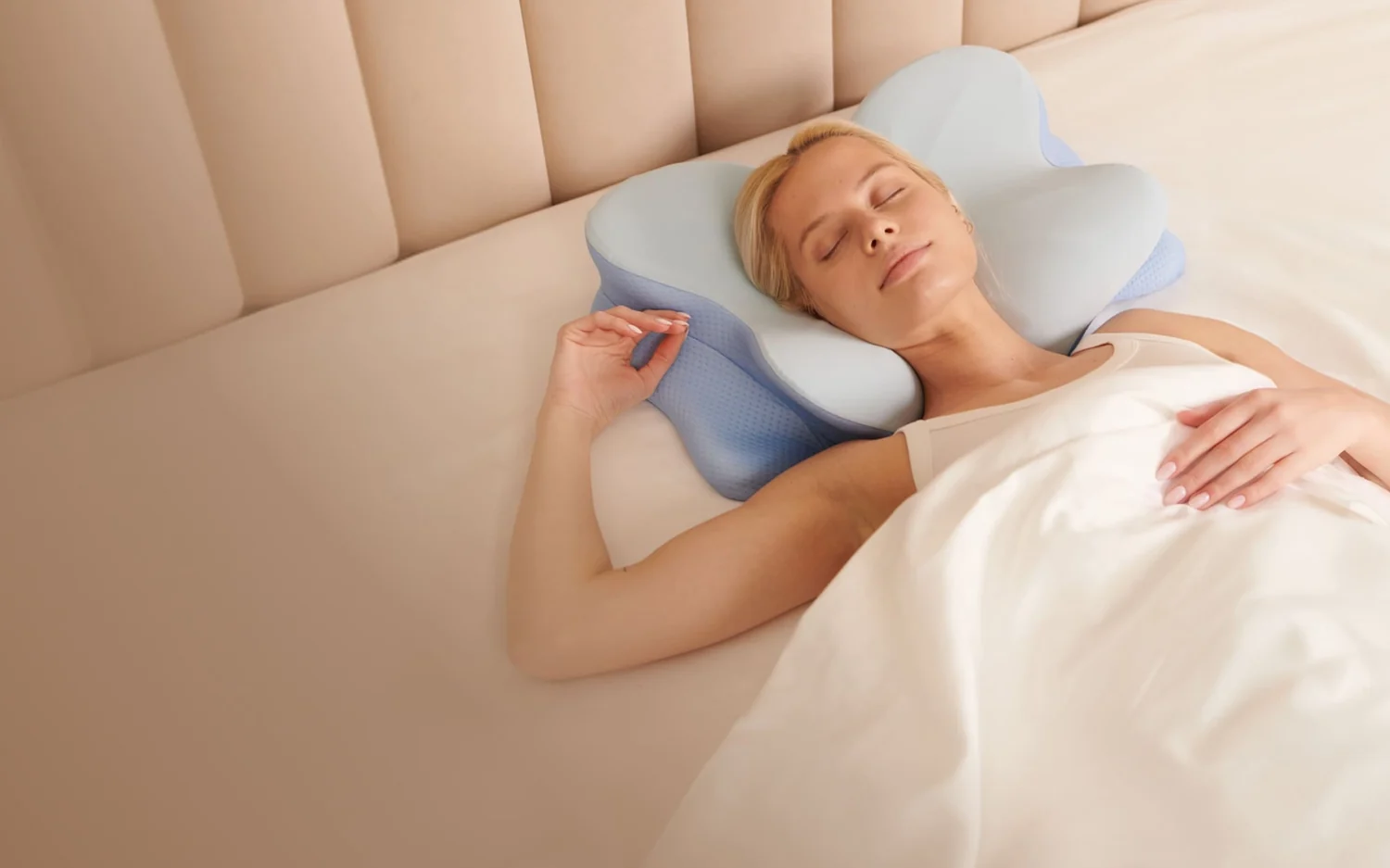
The two-minute measurement that ends years of pillow guesswork
Loft is the number one reason ergonomic pillows get returned. Here is how to measure yours in about two minutes, and why your mattress quietly changes the answer.
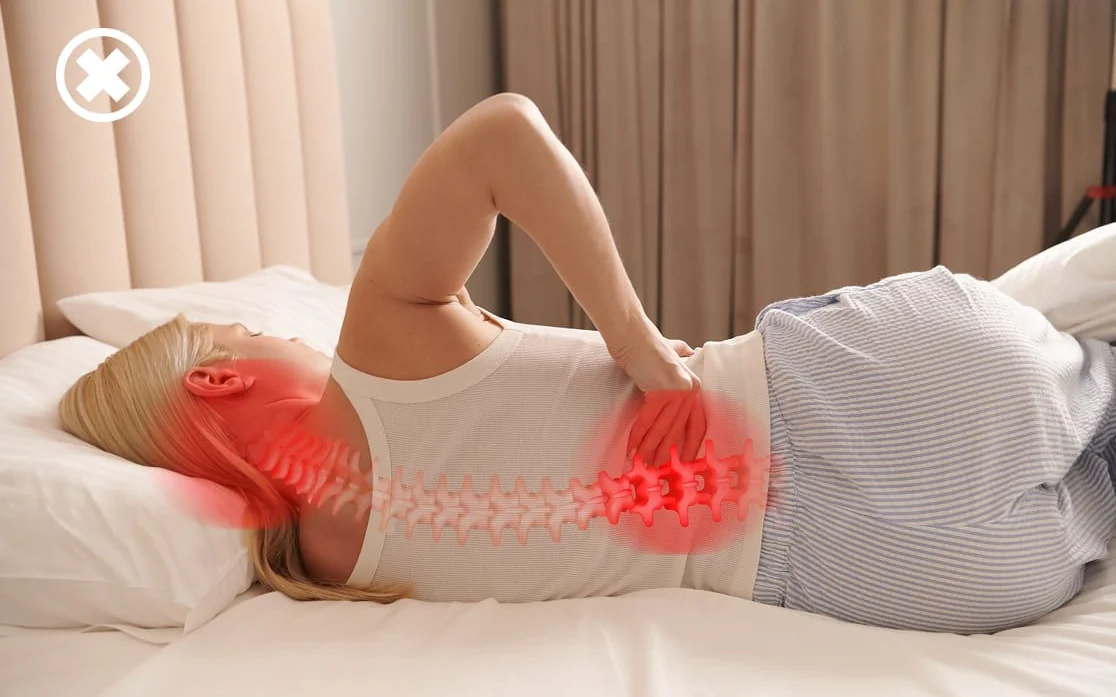
Why your neck hurts every morning, and the seven fixes that actually work
If your neck pain is worst before you have done anything and better after you have done everything, the problem is happening while you sleep. Here is how to find out which cause is yours.

Four alignment mistakes that are wrecking every side sleeper’s morning
Side sleeping is the most popular position and the most demanding on your bedding. Four alignment problems it creates, and how to correct every one of them.